

Few beverages have shaped human history quite like coffee. From ancient Ethiopian highlands to the bustling coffee houses of 17th-century Europe, Arabica coffee has been at the heart of culture, commerce and conversation for centuries. Today, it remains the world's most popular coffee variety, beloved by casual drinkers and connoisseurs alike for its complex flavours and rich aroma.
The History of Arabica Coffee
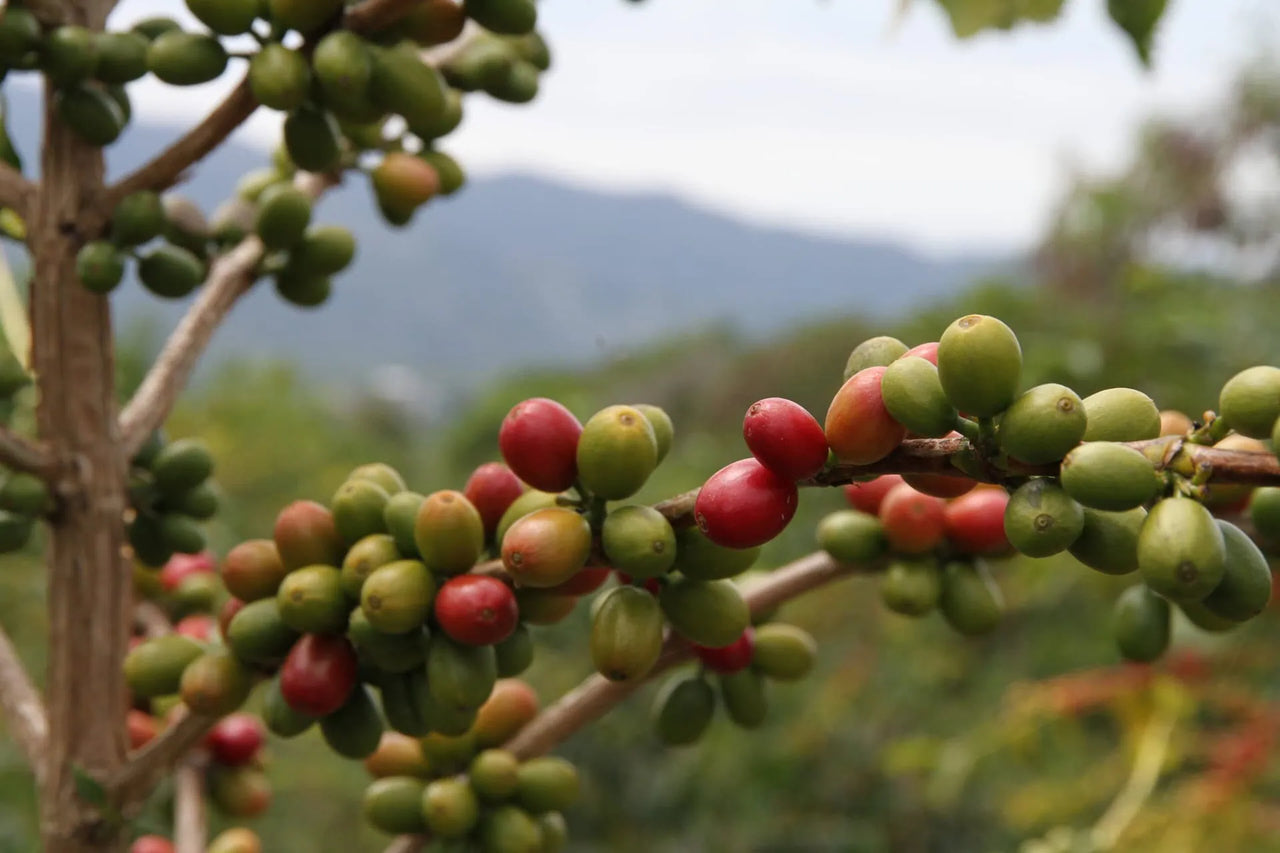
Arabica coffee’s origin traces back to ancient Ethiopia, where an old tale of a goat herder, Kaldi, discovered that his goats became more lively after consuming the red cherries, of which a single coffee bean is at its centre. This serendipitous discovery soon caught the attention of monks in the region, who began to use the berries to stay awake during long prayer sessions.

Pictured: Coffee bean cherries, the red cherries indicate a ripe bean, ready for picking
In the 15th century, Arab traders played a pivotal role in the cultivation and dissemination of coffee. They brought coffee plants back to Yemen, where they were grown in the terraced hillsides of the Arabian Peninsula. Mocha, the port city, became a major centre for coffee trade and also the inspiration behind today’s mocha – a blend of coffee and cocoa. Coffee houses known as qahveh khaneh, began to appear in cities across the Middle East, becoming vibrant hubs of social interaction and intellectual exchange.
Arabica coffee made its way to Europe in the 17th century thanks to Venetian traders. Coffee houses quickly became popular across European cities, fostering an environment for the exchange of ideas during the Enlightenment. By the 18th century, coffee had become a global commodity, with plantations established in the Caribbean, Central and South America and Southeast Asia.
Understanding the Flavour Profile of Arabica Coffee
Arabica is celebrated for its nuanced and complex flavour profile, which sets it apart from other varieties such as Robusta. The taste of Arabica coffee can vary significantly depending on factors such as the growing region, altitude, climate and processing methods, but certain characteristics are commonly associated with high-quality Arabica beans such as its bright acidity, which contributes to a lively and refreshing taste. This acidity can range from a citrusy and fruity to wine-like, providing a vibrant contrast to the coffee’s other notes and it is this acidity that is sought after by coffee enthusiasts. It also tends to have a well-balanced sweetness, often describes as chocolate-like, which complements the acidity and creates a harmonious flavour experience.
In addition to its acidity and sweetness, Arabica coffee has a complex aroma and flavour notes. These can include floral, fruity, nutty and even spicy undertones. For example, Ethiopian Yirgacheffe beans are renowned for their floral and citrusy notes, while Colombian coffee is often prized for its nutty and chocolatey flavours.
Growing Conditions for Arabica Coffee
Arabica plants thrive at higher altitudes, typically between 2,000 and 6,000 feet above sea level. Dibar Coffee Gran Altura Arabica Beans are an example of a coffee grown between 1,100 and 2,200 metres of altitude, leading to an exquisite aroma, light body and just the right touch of acidity. Similarly, Orangutan Coffee Arabica Beans are grown at 1,300+ metres in the Gayo Highlands and Central Aceh. The cooler temperatures at these elevations slow down the growth of the coffee cherries, allowing the beans to develop more complex flavours. The cooler climate also helps reduce the risk of pests and diseases that can affect coffee plants.
Arabica coffee plants prefer a stable climate with consistent temperatures between 16-22 degrees celsius. They’re sensitive to frost and extreme weather conditions, which can damage the plants and affect the quality of the beans. Adequate rainfall is also crucial for the growth of Arabica coffee, needing 1500-2500 millimetres of rainfall annually, distributed evenly through the year. Proper irrigation and drainage systems are essential to prevent waterlogging and ensure healthy plant growth.
Soil quality is another important factor in the cultivation of Arabica coffee. The plants thrive in well-drained, fertile soils with a slightly acidic pH level (around 6 to 6.5). Volcanic soils, rich in organic matter and minerals are particularly beneficial for coffee cultivation. These soils provide the necessary nutrients for the plants and contribute to the development of the beans' unique flavour profiles.
The Coffee Production Process
The journey of Arabica coffee from bean to brew involves several steps that ensure the preservation of its quality and flavour. The process begins with the careful harvesting of coffee cherries. Arabica coffee is typically hand-picked to ensure that only the ripest cherries are selected. This labour-intensive method helps maintain the quality of the beans and prevents the inclusion of unripe or overripe cherries while also boosting employment among local communities.

Pictured: Picked coffee cherries
Once harvested, the coffee cherries undergo processing to extract the beans. There are two main methods of processing: the wet (washed) method and the dry (natural) method. The wet method involves removing the cherry's outer pulp and fermenting the beans in water to remove the mucilage. This method results in a cleaner, brighter flavour profile. The dry method involves drying the whole cherries in the sun before removing the dried pulp and parchment layer. This method often imparts a fuller body and fruitier flavours to the beans.
After processing, the beans are dried to reduce their moisture content to around 10-12%. They are then hulled to remove the parchment layer, polished and sorted based on size, density and quality. The sorted beans, known as green coffee, are then roasted to develop their flavours.

Pictured: Orangutan green coffee beans in the lab, ready for testing
Roasting is a critical step that requires precision and expertise. The beans are heated to temperatures between 185 and 280°C, causing chemical reactions that produce the characteristic flavours and aromas of coffee. The roasted beans are then ground and brewed to create the final cup of Arabica coffee, ready to be enjoyed.

Pictured: Coffee beans being roasted on our Dibar Coffee site in Barcelona
Different Varieties of Arabica Coffee
Arabica coffee is not a monolithic entity; it encompasses a wide range of varieties, each with its distinct characteristics and flavour profiles. These varieties have been developed through natural mutations, selective breeding and careful cultivation practices. Some of the most well-known Arabica coffee varieties include Typica, Bourbon, SL28 and Gesha.
Typica is one of the oldest and most traditional varieties of Arabica coffee. It is known for its clean and well-balanced flavour profile, with bright acidity and sweet, fruity notes. Typica is highly regarded for its quality and has served as the genetic foundation for many other Arabica varieties. Another notable variety is Bourbon, which originated on the island of Réunion (formerly known as Bourbon). Bourbon coffee is prized for its complex flavours, including sweet, caramel-like notes and a rich, full body.
SL28 is a variety that was developed in Kenya by Scott Agricultural Laboratories (hence the "SL" designation). It is renowned for its exceptional acidity, bright citrus flavours and vibrant fruitiness. SL28 is highly sought after by specialty coffee enthusiasts. Gesha (or Geisha) is another highly prized variety, originally discovered in the Gesha village of Ethiopia. Gesha coffee is celebrated for its unique floral and jasmine-like aromas, along with its delicate and tea-like flavour profile.
Brewing Techniques
Brewing Arabica coffee to its fullest potential requires attention to detail and an understanding of various brewing techniques. Each method can highlight different aspects of the coffee's flavour profile, allowing you to tailor your brew to your taste preferences. Let's explore some popular brewing methods for enjoying the rich flavours of Arabica coffee.
The pour-over method is a favourite among coffee enthusiasts for its ability to produce a clean and nuanced cup. This method involves pouring hot water over ground coffee, options to try include Dibar Coffee Gran Altura Arabica Ground Coffee or our Decaf alternative, or Orangutan Project Arabica Ground Coffee, in a filter-lined dripper. The hot water extracts the coffee's flavours as it passes through the grounds and drips into a carafe or mug below. The pour-over method allows for precise control over the brewing variables, such as water temperature, pour rate and coffee-to-water ratio, resulting in a balanced and flavourful cup of Arabica coffee.
The French press, also known as a press pot or plunger pot, is another popular brewing method that produces a rich and full-bodied cup of coffee. In this method, coarsely ground coffee is steeped in hot water for several minutes before being separated by pressing a metal or mesh plunger through the brew. The French press allows for greater extraction of the coffee's oils and flavours, resulting in a robust and aromatic cup. It is particularly well-suited for highlighting the bolder and more intense flavours of Arabica coffee.
For those who enjoy espresso, the espresso machine is the go-to brewing method. Espresso is brewed by forcing hot water through finely-ground coffee under high pressure. This method produces a concentrated and intense shot of coffee with a rich crema on top. Espresso serves as the base for various coffee beverages, such as cappuccinos, lattes and macchiatos. The espresso machine requires precise calibration and skill to achieve the perfect extraction, but the result is a bold and flavourful expression of Arabica coffee.

Conclusion
Arabica coffee is far more than just a morning ritual — it is a story told across continents and centuries, from the sun-drenched hillsides of Ethiopia to the volcanic soils of Colombia and beyond. Its remarkable range of flavours, shaped by altitude, climate, soil and the skill of the people who grow and process it, makes every cup a unique experience. Whether you prefer the bright citrus notes of an Ethiopian pour-over or the bold richness of a South American espresso, there is an Arabica coffee to suit every palate. Armed with an understanding of its history, growing conditions and brewing techniques, you're now well-equipped to explore and truly appreciate one of the world's most extraordinary beverages.

