

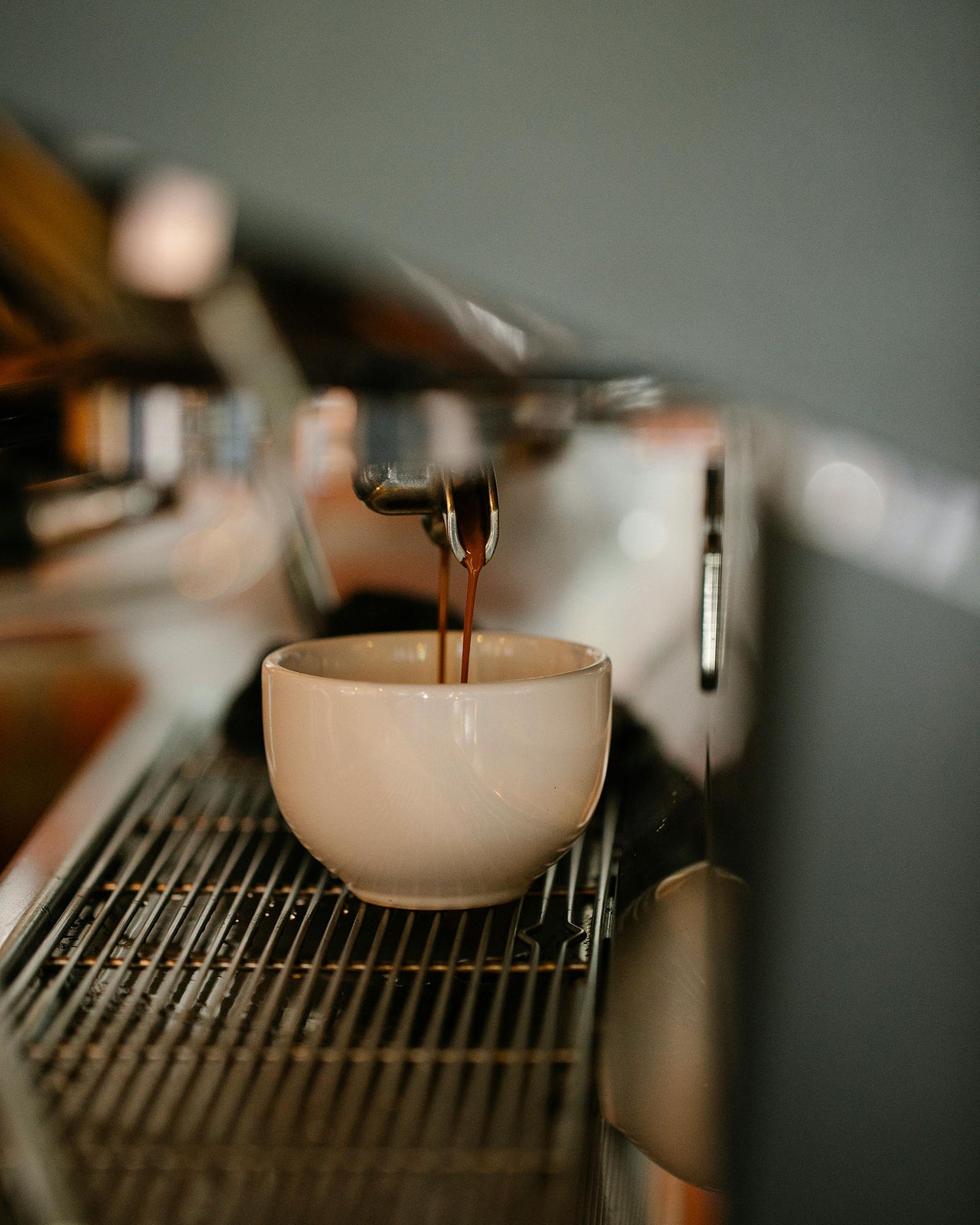
The history of the espresso all started in Turin. At the turn of the 20th century, an Italian inventor named Angelo Moriondo had already patented a steam-driven coffee machine — but it was Luigi Bezzera, a Milanese businessman with a productivity problem, who really kicked things off. In 1901, frustrated by how long his workers spent on coffee breaks, Bezzera patented a machine that forced hot water through ground coffee in seconds. Fewer minutes wasted, more espresso consumed. The irony that his efficiency machine would go on to define one of the world's great slow-down rituals is not lost on anyone. The word 'espresso' itself is telling. It comes from the Italian for 'pressed out' — but it also carries the meaning of 'express', as in fast, made for you, right now. By the 1950s, Gaggia had introduced the modern lever-driven machine, producing that signature layer of golden crema on top, and espresso culture exploded across Italy. Café bars became the social infrastructure of Italian cities: places to stand, sip, exchange a few words, and get on with your day. From Italy, espresso spread quietly through Europe and eventually the world. It arrived in Britain in the 1950s via Soho coffee bars — louche, atmospheric places where jazz played and espresso machines hissed theatrically behind the counter. The rest, as they say, is history. Or rather, it's your morning.

Which European Countries Drink The Most Espresso?
If espresso were a religion, Italy would be the Vatican. Italians consume around 14 billion espressos a year — that's roughly 230 per person — and treat the ritual with a seriousness that borders on the sacred. Order a cappuccino after 11am in Naples and watch the barista's expression. You've been warned. But Italy isn't alone. Portugal has one of the most underrated espresso cultures in Europe — the bica, served in small ceramic cups in tiny tascas, is as much a part of Lisbon life as the trams. Spain has its cortado, a shot cut with a small splash of warm milk, consumed at the bar with a sugar-dusted pastry. France does its café serré with a Gallic shrug of unapologetic bitterness. And Scandinavia, perhaps surprisingly, leads the world in per-capita coffee consumption — though their love of filter has been giving way to a serious specialty espresso scene in recent years. What unites all these countries isn't just a shared love of coffee — it's the understanding that a good espresso is a moment, not just a drink. It punctuates the day. It marks transitions. Whether you're starting your morning, breaking from work, or finishing a long lunch, espresso is the full stop.
How Do Italians Take Their Espresso?
Standing up. This is perhaps the most important thing to know. In Italy, you walk into a bar (which is what they call a café), you order at the till, hand over your receipt to the barista, and you drink your espresso at the counter in two or three sips. The whole thing takes under three minutes. There are no laptops. There are no oat milk variations. There is just the coffee, the cup, and the conversation. Italians also have firm views on when to drink what. Espresso is an all-day affair — morning, after lunch, mid-afternoon, after dinner. The post-meal espresso is practically medicinal in Italian culture, believed to aid digestion. A macchiato (espresso 'stained' with a drop of foamed milk) is acceptable at most hours. The cappuccino, however, is strictly a morning drink. Milk-heavy coffees after noon are considered hard on the stomach, and any Italian grandmother will tell you so directly. The other rule? Sugar. A small spoon of white sugar stirred into the shot — not before, but after the first sip — is completely standard. Some Italians stir it in and drink the sweetened, syrupy coffee at the bottom as a kind of reward. No judgement here. That's just good living.
Why Do People Like Espresso?
The honest answer is: because nothing else tastes quite like it. The pressure extraction process — hot water forced through finely ground coffee at around 9 bars of pressure in 25 to 30 seconds — produces a concentration of flavour that no other brewing method can replicate. You get the full spectrum of the bean: the brightness, the bitterness, the sweetness, the body. And then there's the crema — that layer of golden foam on top, which traps volatile aromatics and gives espresso its distinctive, velvety mouthfeel. But beyond the flavour science, people love espresso because of what it represents. It's coffee in its most honest form — nothing diluted, nothing hidden. A well-pulled shot from quality beans is a genuinely complex sensory experience. Tasting notes of dark chocolate, dried fruit, hazelnut, or caramel aren't marketing fiction; they're what happens when skilled roasting meets precise extraction. And then there's the ritual. The sound of the grinder. The tamping. The hiss of steam. Whether you're making it at home or watching a barista work, there's something deeply satisfying about the process. Espresso asks you to slow down for thirty seconds, even if you drink it in three.
When Should You Drink Espresso?
Whenever you want one, honestly — but there's a loose framework that serves most people well. Morning espresso is the classic: sharp, focused, and faster to make than any other coffee. Many people find a single or double shot before breakfast easier on the stomach than a large milky drink. If you're eating, an espresso after the meal is an Italian habit worth stealing. The afternoon espresso — around 2 or 3pm — is criminally underrated in Britain. Instead of reaching for a biscuit or another flat white, a single shot provides a clean, focused lift without the milk-heaviness that can slow you down. It's the coffee equivalent of splashing cold water on your face. As for evenings: post-dinner espresso is a perfectly legitimate choice, particularly if you're the kind of person who's already learnt that caffeine sensitivity is deeply personal. Some people sleep just fine after an 11pm shot. Others — the rest of us — probably shouldn't push it past 4pm. Know your constitution and act accordingly.
What Do You Need To Make Espresso At Home?
The good news is that you don't need to spend thousands to make a decent espresso at home. The less good news is that the equipment does matter more than with other brewing methods. Espresso is an unforgiving format — it magnifies everything, including mistakes. Here's the short version of what you need. First: a grinder. A good burr grinder is arguably more important than the machine itself. Pre-ground coffee goes stale within minutes of grinding, and espresso requires a very fine, consistent grind that most blade grinders simply can't achieve. Invest here first. Second: a machine that can generate sufficient pressure — at least 9 bars. Entry-level espresso machines from brands like De'Longhi or Sage can do this reliably from around £150–£300. Manual lever machines like the Flair or Cafelat Robot are excellent options for those who enjoy the hands-on process and want great results without complex electronics. Finally: good coffee. Fresh beans, roasted for espresso, make an enormous difference. This is where we come in.

Where To Buy Espresso Coffee Capsules
If you're working with a pod or capsule machine, the coffee inside the capsule matters every bit as much as the equipment. Many supermarket capsules use commodity-grade beans that are over-roasted to mask defects — you end up with bitterness rather than flavour. The difference when you switch to specialty-grade capsules is immediate and genuinely surprising.
At Dibar, we've put serious thought into our capsule range. Our compostable coffee capsules are made with the same quality beans as our café blends — specialty-grade, carefully sourced, and roasted to bring out their best. And because we use fully compostable capsules, you get great espresso without the guilt of single-use plastic waste piling up. It's the small details that make the difference.
Explore our full range of compostable coffee capsules at dibarcoffee.co.uk — and bring a little piece of the espresso tradition into your kitchen.
